Cargo Shipping from the UK to Pakistan: Essential Checklist for Transit, Customs and Costs
Are you looking to ship cargo from the UK to Pakistan without delays, hidden charges, or customs issues? If yes, then you’ve landed on the right blog.
Cargo shipping from the UK to Pakistan has become increasingly important for businesses, traders, and individuals due to growing trade and e-commerce demand. But without proper planning, shippers may face unexpected delays, customs penalties, or inflated freight charges.
It is quite a lengthy and time-consuming process, which involves multiple stages, including selecting the right shipping method, understanding transit timelines, complying with customs regulations, and managing overall shipping costs.
Understanding Cargo Shipping from the UK to Pakistan
Whether you are sending commercial cargo, personal items, or bulk shipments, understanding cargo shipping methods, transit times, and customs requirements is crucial.
There are numerous key factors:
- Documentation accuracy
- Cargo packaging
- Freight forwarding services
- Significantly impact delivery success
It is a structured logistics process that includes cargo consolidation, freight handling, customs compliance, and last-mile delivery.
There are different types of cargo services from the UK to Pakistan. The most common types are mentioned below:
Types of Cargo Services from the UK to Pakistan
Almost every cargo type comes with its own benefits, transit times, and cost structures.UK to Pakistan shipping costs need keen attention to understand in the case that which service suits your shipment requirements in the best possible manner.
Knowing the best cargo services available allows you to choose the most reliable and economical option while ensuring your shipment reaches its destination safely and on schedule without any stress.
Air Freight vs Sea Freight – Which Is Better for Pakistan?
Shipping goods is a major concern for businesses and individuals, who often face a critical decision to make.
Whether it’s air-freight vs sea-freight, both modes of transport have their advantages, limitations, and costs, making it essential to understand which one suits your cargo, timeline, and budget.
Collectively, both have their own pros and cons. You have to review all your basic needs and wants, then make the choice accordingly.
Hence, we mention the key difference between the two:
| S.No: | Feature | Air Freight | Sea Freight |
| 1 | Cost | High | Low |
| 2 | Cargo Volume | Limited | Large |
| 3 | Security | High | Moderate |
| 4 | Delivery Speed | Fast (2–7 days) | Slow (20–45 days) |
| 5 | Environmental Impact | High Carbon Footprint | Relatively low carbon footprint |
| 6 | Best for | Perishable, urgent shipments | Bulk, heavy, non-perishable goods |
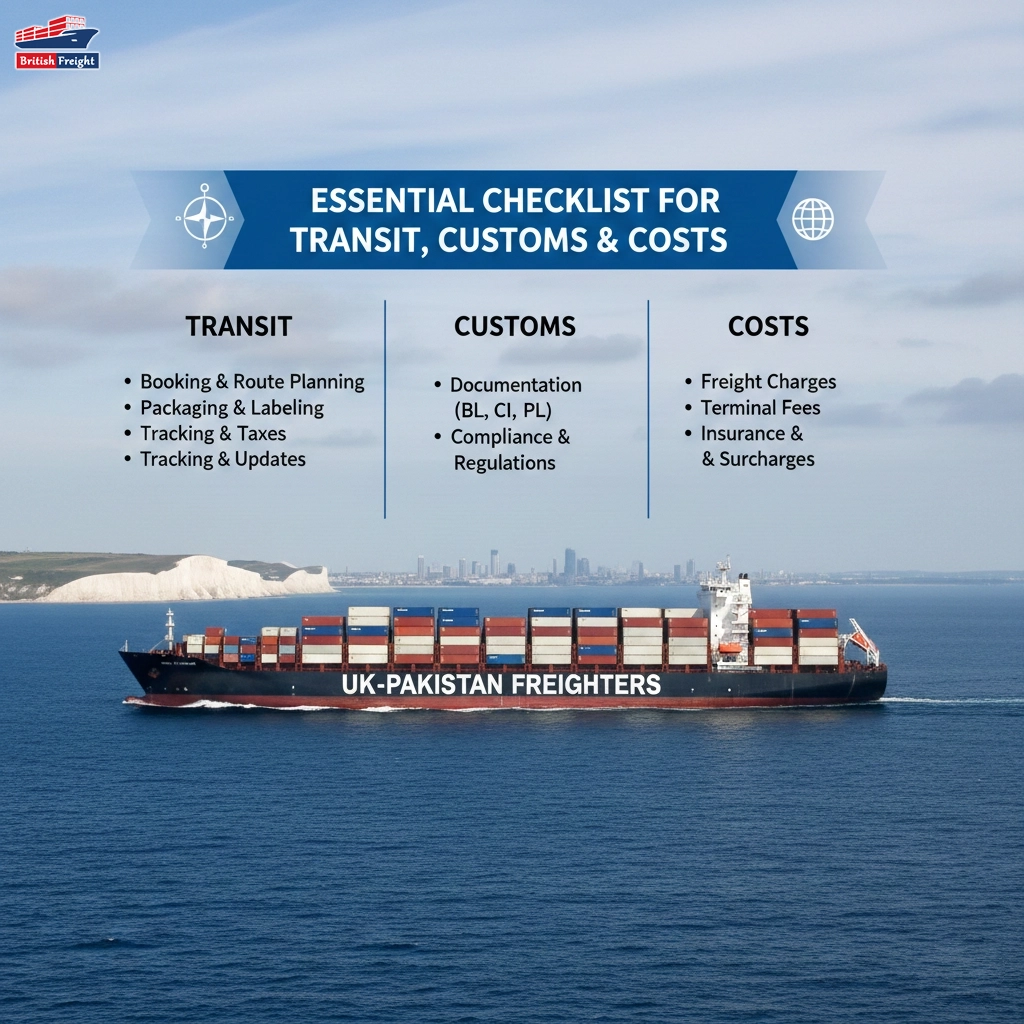
Essential Checklist Before Shipping Cargo to Pakistan
The cargo shipping could be quite a lengthy and complex process. In order to make this process completely hassle-free, you have to pre-plan the checklist of essentials first.
Here are step-by-step instructions, ensuring your shipment arrives safely and on time.
- Verify Cargo Type and Regulations
- Choose the Right Shipping Method
- Packaging and Labelling
- Documentation Preparation
- Calculate Costs and Duties
- Choose a Reliable Cargo Service Provider
Required Shipping Documents for UK to Pakistan Cargo
The shipping of cargo internationally requires careful attention to paperwork. Proactively keeping these ready ensures faster customs clearance and a smoother delivery experience.
Here are a few most important documents that you must keep it handy for stress-free shipping:
- Commercial Invoice
- Packing List
- Bill of Lading or Air Waybill
- Certificate of Origin
- Insurance Certificate (if insured)
The Cargo Weight, Volume, and HS Code Verification
The verification of cargo weight, volume, and HS codes is a fundamental step in the shipping process to ensure accuracy and compliance.
All freight-forwarder-UK-to-Pakistan must have some elements that directly impact freight charges, customs duties, and regulatory compliance. Proper verification minimises risks, prevents customs issues, and ensures cost transparency.
We categorise and explain them as:
- Cargo Weight: Must be measured accurately (gross and net) to avoid discrepancies, penalties, or delays during transportation.
- Cargo Volume: Calculated in cubic metres (CBM) to determine space requirements and freight costs, especially for air and sea shipments.
- HS Code Verification: Correct Harmonised System (HS) codes ensure proper classification of goods, accurate duty calculation, and compliance with import/export regulations.
Transit Process for Cargo Shipping from the UK to Pakistan
The cargo shipping from the UK to Pakistan transit time involves a series of coordinated steps that ensure goods are transported safely and efficiently between the two countries, as far as concern with transit is concerned.
From initial scheduling and export and custom clearance in the UK to international transit and import processing in Pakistan, each stage plays a critical role in ensuring smooth and reliable cargo movement.
Here is the complete scenario of the transit process for cargo shipping from the UK to Pakistan.
- Estimated Transit Time for Sea and Air Cargo
- Tracking Cargo Shipments from the UK
- Common Transit Delays and How to Avoid Them
- Customs Clearance Process in Pakistan
- Pakistan Customs Import Regulations
- Duties, Taxes, and Customs Charges in Pakistan
- Prohibited and Restricted Items for Import
Tips to Reduce UK to Pakistan Cargo Shipping Costs
It is a fact that high shipping costs are not unavoidable, but with the right planning and a clear understanding of the logistics process, it’s possible to reduce expenses without compromising on reliability or delivery timelines.
Planning and defining the shipping routes UK to Pakistan is a huge task to do effectively. Besides that all, there are still some small strategic decisions that can lead to substantial savings. We will provide you with a guide that explores practical and proven tips to help you lower UK to Pakistan cargo shipping costs.
Meanwhile, making international shipping more efficient, predictable, and cost effective whether you’re sending personal goods or managing commercial consignments.
Some of the essential tips are mentioned as below:
- Choose the Right Shipping Method
- Consolidate Your Shipments
- Compare Freight Forwarders
- Optimise Packing & Weight
- Understand Customs & Duties
- Plan Around Peak Seasons
- Negotiate Contract Rates
- Use a Local Agent or Partner in Pakistan
- Choose Cost-Effective Ports
- Consolidate Documentation in One Place
Final Thought
When it comes to cargo shipping from the UK to Pakistan, preparation is the key to success.
Whether you choose air freight or sea freight, staying organised and working with experienced cargo consolidation UK to Pakistan ensures faster delivery, smoother customs clearance, and better cost control.
Preparation today can save you time, money, and stress tomorrow!
If you are also struggling to find the best service, then your wait is over. The British Freight is a one-stop solution for all your problems. Connect with us today to discuss your shipping needs.
FAQs
What documents are required for shipping cargo from the UK to Pakistan?
The most commonly required documents are a commercial invoice, packing list, bill of lading or airway bill, copy of CNIC/passport, and any required import permit.
Can I ship personal household goods from the UK to Pakistan?
Yes, personal effects and household items can be shipped, but used items may be subject to customs inspection and duties.
How long does cargo shipping from the UK to Pakistan take?
Air cargo typically takes 5–10 days, while sea freight can take 25–40 days, depending on the port, route, and customs clearance.
What items are prohibited from shipping to Pakistan?
Prohibited items include alcohol, narcotics, weapons, counterfeit goods, and restricted electronics without approval.