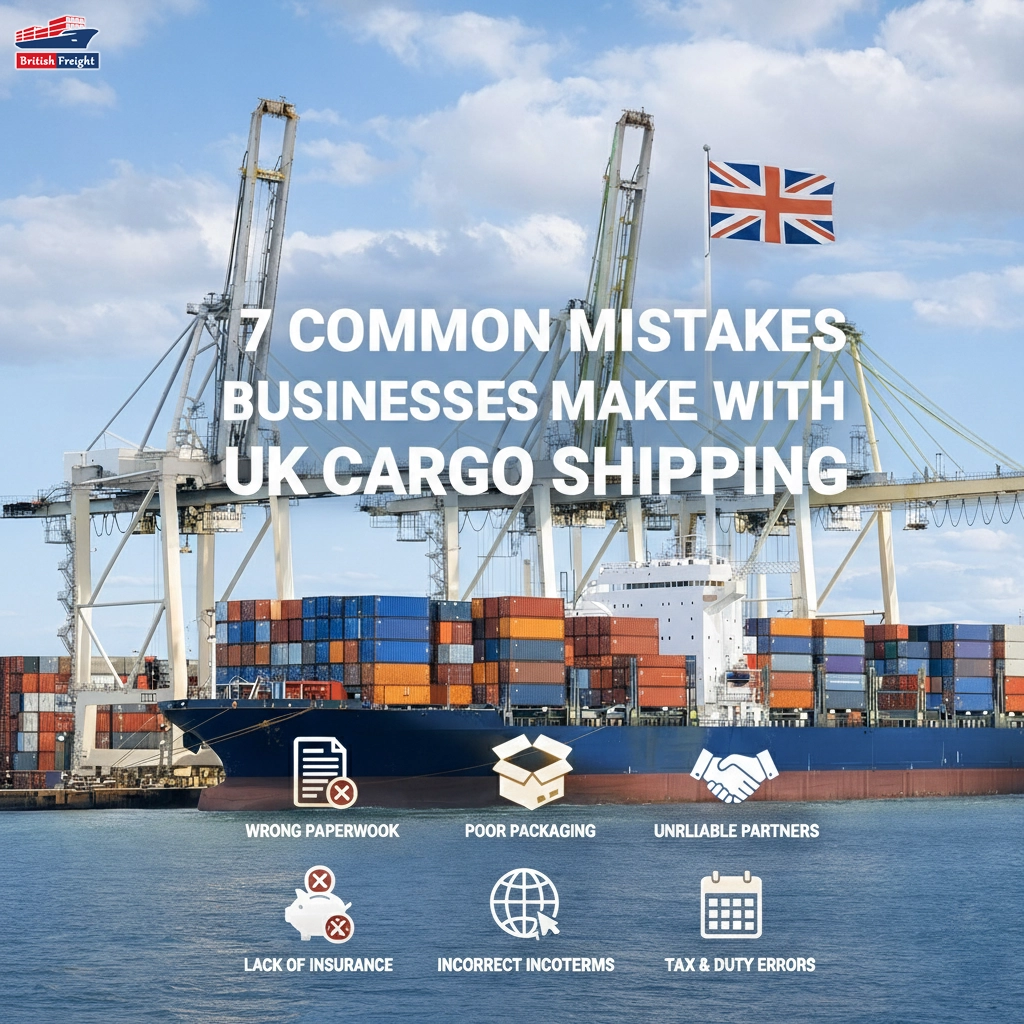
7 Common Mistakes Businesses Make with UK Cargo Shipping Companies
If UK shipping feels unpredictable, this is probably why. Many UK cargo shipping companies charge high prices for poor service, which is why customers end up with unsatisfactory results. The reality is that many issues are caused by repeatable, fixable mistakes. By understanding these pitfalls, you can better evaluate UK cargo shipping companies and choose a partner that ensures reliability.
- Documentation Errors and UK Cargo Shipping Companies
- Navigating Post-Brexit Rules with UK Cargo Shipping Companies
- HS Code Accuracy for UK Cargo Shipping Companies (HS Codes)
- Choosing an Inappropriate Shipping Method from UK Cargo Shipping Companies
- Poor Packaging and Incorrect Labelling
- Not Having Adequate Cargo Insurance
- Poor Planning for Delays and Hidden Costs
Documentation Errors and UK Cargo Shipping Companies
International cargo shipping UK requires several essential documents, such as commercial invoices, packing lists, bills of lading, and customs declarations. The problem usually begins when businesses rush the paperwork or miss out any important document.
Small errors such as incorrect product descriptions, wrong shipment values, or missing consignee details can cause customs authorities to delay or stop the shipment.
Missing Commercial Invoices and Packing Lists
Missing shipping documents can lead to serious financial losses. As the commercial invoices and packing lists accompany every shipment is crucial for smooth customs clearance and efficient supply chain management.
The commercial invoice is more than just a piece of paper that provides details about the seller, buyer, value of goods, and terms of sale, while the packing list outlines how the shipment is packed, including quantities, weights, and packaging details.
Navigating Post-Brexit Rules with UK Cargo Shipping Companies
The only way that keeps you stress-free is by staying updated on UK-specific trade laws, and working with customs brokers can significantly reduce this risk.
Many businesses underestimate the impact of UK customs regulations, especially after Brexit. Any misunderstanding can cause shipments to be held at ports or borders for inspection.
HS Code Accuracy for UK Cargo Shipping Companies (HS Codes)
The incorrect Harmonised System (HS) codes can create issues. Customs authorities may reclassify goods, impose fines, or delay clearance if codes are incorrect. To prevent this, businesses should verify HS codes using official UK tariff tools.
Choosing an Inappropriate Shipping Method from UK Cargo Shipping Companies
The only way that keeps you stress-free is by staying updated on UK-specific trade laws, and working with customs brokers can significantly reduce this risk.
Many businesses underestimate the impact of UK customs regulations, especially after Brexit. Any misunderstanding can cause shipments to be held at ports or borders for inspection.
Air Freight vs Sea Freight Confusion
Ignoring Delivery Timelines and Urgency
These two shipping methods serve different purposes, yet many businesses struggle to decide which option best fits their shipment needs. Simply understanding the key differences helps avoid delays, unexpected costs, and logistical issues.
Choosing between air freight and sea-freight is often confusing for shippers, especially when balancing speed, cost, and cargo type. If you feel like air cargo service UK is secure, but it will be quite expensive.
In the table below, we differentiate the major differences between air and sea freight in order to bring clarity.
| S.No | Features | Air Freight | Sea Freight |
| 1 | Cost | Expensive | Cost-effective |
| 2 | Transit Time | Very fast (days) | Slow(weeks) |
| 3 | Best For | Urgent, lightweight, high-value cargo | Heavy, bulky, non-urgent cargo |
| 4 | Cargo Capacity | Limited | Very High |
| 5 | Reliability | High, fewer delays | Weather port delays are possible |
| 6 | Environmental Impact | Higher carbon footprint | More ECO-Friendly |
| 7 | Custom Clearance | Faster | Takes Longer |
| 8 | Overall Use Case | Speed-Focused Shipping | Budget-focused shipping |
Failing to prioritise delivery timelines and shipment urgency can negatively impact the entire supply chain.
Ignoring urgency can result in shipments arriving too late to meet market demand, contractual commitments, or seasonal requirements.
Proper timeline management ensures smoother transit, cost efficiency, and reliability throughout the shipping process. Here are some of the risk factor which occurs in the case of ignoring delivery urgency.
Risks of Ignoring Delivery Urgency:
- Late deliveries
- Higher logistics expenses
- Customer dissatisfaction
- Missed business opportunities
- Supply chain disruptions
Poor Packaging and Incorrect Labelling
Low quality or improper packaging and labelling can cause serious issues during UK cargo shipping. As the weak packaging can increase the risk of product damage, and on the other hand, incorrect or missing labels can cause customs rejections or misrouteing.
This will increase costs and delivery delays. So to protect goods and speed up customs clearance, it is recommended to use compliant packaging and ensure labels meet UK shipping standards.
Not Having Adequate Cargo Insurance
All business organisations should always purchase cargo insurance that matches the full value of the shipment. The shipping of goods without arranging proper insurance, unaware that carrier liability is often limited.
To get maximum benefit, always purchase cargo insurance that matches the full value of the shipment.
Poor Planning for Delays and Hidden Costs
Whether it is a container freight UKor anything else, when delays occur, supply chains are disrupted, and customer commitments are missed. Proper planning, realistic timelines, and accurate cost calculations help businesses maintain smooth UK cargo shipping operations.
So in this case, never underestimate customs clearance time, port congestion, or weather disruptions. They also fail to budget for hidden costs such as duties, VAT, storage fees, or demurrage charges.
Underestimating UK Customs Clearance Requirements
Whether it is a container freight UKor anything else, when delays occur, supply chains are disrupted, and customer commitments are missed. Proper planning, realistic timelines, and accurate cost calculations help businesses maintain smooth UK cargo shipping operations.
So in this case, never underestimate customs clearance time, port congestion, or weather disruptions. They also fail to budget for hidden costs such as duties, VAT, storage fees, or demurrage charges.
Lack of Knowledge of Export Regulations
The door-to-door cargo services UKwould not be an easy task if you are unaware of these regulations, even minor errors can lead to serious disruptions in the shipping process. Without proper understanding, businesses risk fines, shipment holds, or complete cargo seizures, increasing both costs and delivery timelines.
Only working with experienced freight forwarders or customs consultants helps businesses stay compliant and avoid unnecessary shipping complications.
Delays Due to Incomplete Declarations
Incomplete declarations create uncertainty for customs clearance, often resulting in shipment delays.
On the other side customs authorities may hold cargo until all details are verified, leading to longer transit times and additional costs.
Here are some common reasons for delaying:
- Missing or incorrect shipment information
- Increased risk of customs inspection
- Longer clearance processing times
- Possible storage and demurrage charges
Ignoring Cargo Insurance Protection
The overlooking of cargo insurance protection exposes shipments to unnecessary risks. Shipments face multiple hazards in transit, and without insurance, any loss or damage can result in unrecoverable expenses and delayed deliveries.
A small insurance premium can provide peace of mind and financial security, ensuring shipments remain protected from unforeseen transit risks successfully.
Working with Inexperienced or Unreliable Freight Forwarders
If you are working with inexperienced forwarders often fail to anticipate potential risks such as port congestion, customs inspections, or seasonal delays.
This lack of foresight can cause shipments to arrive late or incur unexpected charges. Also, these problems not only delay deliveries but can also damage business relationships and customer trust, especially in time-sensitive shipments.
Partnering with a trusted and experienced freight forwarder ensures smoother operations and greater peace of mind.
Selecting Providers Based Only on Low Cost
In international cargo shipping, a slightly higher upfront cost often ensures smoother customs clearance and fewer operational risks.
When service quality is sacrificed for cost savings, businesses may face shipment delays, cargo damage, or unexpected expenses that outweigh the initial savings.
So, here opting for the cheapest shipping provider might appear to save money, but it often leads to hidden challenges.
Poor Communication and Tracking Support
Poor communication and insufficient tracking support can create massive problems. Without clear and prompt updates, it becomes difficult to anticipate delays, handle customs requirements, or resolve issues as they arise.
To secure incredible result the companies that invest in real-time tracking tools and responsive customer support often see fewer delays and happier customers.
Final Thought
A careful approach to documentation, timelines, and provider selection can make all the difference. Avoiding the common mistakes in UK cargo shipping or any type of sea-freight UK will help businesses reduce delays, minimise costs, and enhance customer satisfaction.
The key is planning, diligence, and the right partners. If you are also struggling to find the right partner in your journey of cargo shipping, then British Freight is there to facilitate you 24*7. We provide you with premium quality services at reasonable prices.
FAQs
How does ignoring cargo insurance affect businesses?
Insurance is complete protection, as without insurance, businesses bear full financial risk if goods are lost, damaged, or stolen during transit.
Why is a lack of knowledge about export regulations a mistake?
Not knowing export rules is a crucial issue and can result in non-compliance, legal penalties, and shipment returns.
Can relying solely on one freight forwarder be risky?
Yes. Over-reliance limits flexibility and may leave a business vulnerable if the forwarder fails to deliver.
Are low-cost shipping options always reliable?
Not necessarily, it can be quite risky. Low-cost options may save money upfront, but can cause hidden costs through delays, damages, or poor service.