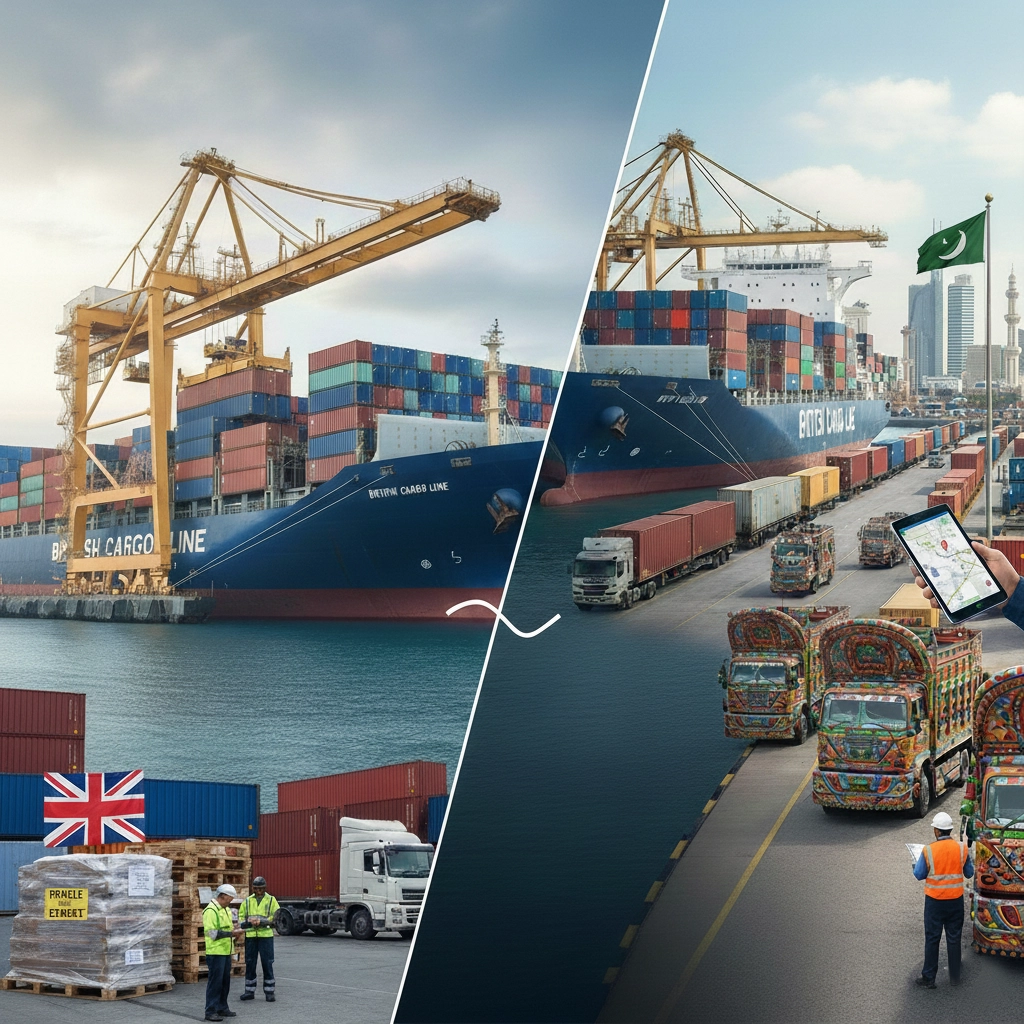
Step-by-Step Guide to Sending Cargo from the UK to Pakistan
Think shipping from the UK to Pakistan is complicated? This step-by-step guide will change your mind.
In this blog, we will discover the most effective and easy ways to make cargo sending completely effortless within budget. With strong trade ties between the UK and Pakistan, reliable cargo shipping has become essential for businesses of all sizes.
However, navigating freight options, export regulations, and customs clearance requires proper planning.
Here, we explain how to send cargo from the UK to Pakistan efficiently, cost-effectively, and on time while ensuring compliance.
Overview of Cargo Shipping from the UK to Pakistan
Only by selecting the right shipping method and understanding customs procedures can shippers ensure timely delivery and cost efficiency without any risk.
Cargo shipping from UK to Pakistan involves transporting goods through air or sea freight using international logistics services.
These shipping routes support both commercial exports and personal shipments, making it popular among businesses and individuals alike.
Who Can Send Cargo and What You Can Ship?
Whether you’re relocating personal belongings, fulfilling customer orders, or exporting goods in bulk, cargo solutions are tailored to suit both one-time and regular shipping requirements.
You can send almost anything—from consumer goods and retail stock to industrial equipment and raw materials. Items such as clothing, furniture, auto parts, electronics, and non-perishable food are commonly shipped.
However, all cargo must comply with shipping laws, safety standards, and customs regulations to ensure smooth clearance and deliver within time limits.
Hence, we explain a few steps which will make the overall process easy, clear and understandable to you, whichever item, service and methodology you choose.
Step 1 Choose the Best Cargo Shipping Method
The option you select affects cost, speed, and safety, but it will only be possible when you make the right decision about cargo service to Pakistan.
Below we highlight a few essential step you make a smart selection about the shipping method:
- Understand your cargo size and weight
- Decide if speed or cost is your priority
- Choose air freight for urgent shipments
- Select sea freight for heavy or bulk cargo
- Use road freight for short-distance delivery
Air Freight vs Sea Freight to Pakistan
Choosing between air freight and sea freight is crucial. The air freight includes multiple factors, such as this speed, which comes at a higher cost, making it less suitable for large or heavy consignments.
On the other hand, sea freight is more cost-effective for bulk shipments, offering flexibility in cargo size and weight.
FCL vs LCL – Which Option Is Right for You?
Understanding the difference between FCL and LCL shipping can help you reduce costs and avoid delays. FCL shipping gives you full control of a container, making it a great choice for high-volume or fragile cargo.
LCL shipping works best when your cargo volume is small, and these shipments may take slightly longer due to consolidation and dae consolidation processes.
Step 2 – Prepare and Pack Your Cargo Properly
Proper preparation not only protects your cargo but also ensures timely and hassle-free shipping. Your cargo requires proper packing for safe delivery. Use strong boxes, crates, or pallets, and secure fragile items with bubble wrap or foam.
Packing, Labelling, and Weight Requirement
No matter what you’re going to send, just seal packages tightly and label them clearly with handling instructions. Cheque its weight and make sure to provide extra coverage and support for sensitive items.
Restricted and Prohibited Items for Pakistan
Pakistan has strict customs regulations regarding restricted and prohibited items. These rules protect public safety, national security, and cultural values.
Failing to follow them can result in fines, shipment refusal, or legal complications.
Here are a few of them that are completely prohibited via shipping containers in Pakistan:
- Alcohol and tobacco
- Pornographic and offencive content
- Counterfeit items & fake currency
- Medicines and chemical substances
- Weapons, firearms, and ammunition
- Perishable food items without proper permits
- Endangered species, plants, or animal products
Step 3 Documents Required for UK to Pakistan Cargo Shipping
Shipping cargo from the UK to Pakistan requires careful preparation. One of the most important steps is ensuring all the necessary documents are in order.
Here is the list of all the important documents:
Commercial Invoice – Shows value & details of goods
Packing List – Breaks down each item and quantity
Bill of Lading / Airway Bill – Shipping proof from the carrier
Certificate of Origin – Confirms product’s origin
Import Licence – Needed for restricted goods
Insurance Certificate – Safety net against damage or loss
Customs Declaration – Required for Pakistan customs clearance
Step 4 Customs Clearance in the UK and Pakistan
customs clearance is a vital part of the journey. Customs officials inspect shipments to ensure compliance with national and international trade laws.
Working with experienced freight forwarders UK Pakistan, or cargo agents can simplify the process, ensuring your goods move quickly and legally through both countries’ customs systems.
UK Export Customs Process
The UK export customs process is an essential step for businesses shipping goods overseas. Along with proper and accurate classification of products, compliance with HMRC regulations can prevent costly delays and fines.
Pakistan Import Duties, Taxes, and Clearance
Pakistan’s import process includes paying customs duties, taxes, and completing clearance procedures. To clear goods through customs, importers must provide proper documentation, including invoices, packing lists, bills of lading, and any required certificates.
Step 5 Cargo Transit Time, Tracking, and Delivery
Every Cargo transit time can vary significantly depending on the route and transport mode. Along with advanced tracking systems, you can cheque your cargo’s location online, receive notifications, and anticipate delivery dates accurately.
On-time delivery not only ensures customer satisfaction but also strengthens trust in your logistics provider services.
How Long Does Cargo Take from the UK to Pakistan?
It depends on distance, product and type of shipping, but normally Pakistani cities like Karachi, Lahore, or Islamabad take 3 to 7 days. Sea cargo, while more budget-friendly, usually takes 15 to 21 days, factoring in port operations and customs clearance.
Door-to-Door Delivery and Cargo Tracking
The combination of door-to-door delivery and real-time tracking not only saves time but also reduces the risk of lost or delayed shipments, making it an ideal choice for both personal and business needs. These services handle your cargo from pickup to final delivery, minimising handling errors and delays.
Cost of Sending Cargo from the UK to Pakistan
The UK to Pakistan route involves costs that depend on several factors, including the type of cargo, its weight, dimensions, and the chosen shipping method.
Many other factors, such as packaging, handling fees, and customs clearance, also contribute to the final shipping charges.
Comparing rates from reliable cargo companies ensures that your shipment reaches Pakistan safely without overspending.
Tips to Reduce UK–Pakistan Cargo Expenses
Along with proper planning and strategy, UK–Pakistan cargo shipping can be both efficient and budget-friendly. Efficient packaging reduces weight and volume, which directly lowers shipping fees.
Double-checking of customs regulations to avoid unnecessary fines. Finally, scheduling shipments during off-peak times can lead to discounts.
Here are some top-most tips to reduce UK-Pakistan Cargo Expenses:
- Shop Around – Don’t settle for the first quote; compare prices for the best deal.
- Pick the Right Shipping Type – Sea freight saves money if you aren’t in a hurry.
- Bundle Your Shipments – Sending everything together usually costs less than multiple small parcels.
- Pack Smart – Use compact and sturdy packaging to avoid extra weight or damage fees.
- Book Early – Cargo rates are cheaper when you reserve in advance.
- Know Customs Fees – Being aware of duties prevents surprise costs at delivery.
- Ask for Discounts – Frequent shippers can often get special rates.
Avoid High-Demand Periods Shipping during off-peak months can save you money.
The UK to Pakistan route involves costs that depend on several factors, including the type of cargo, its weight, dimensions, and the chosen shipping method.
Many other factors, such as packaging, handling fees, and customs clearance, also contribute to the final shipping charges.
Comparing rates from reliable cargo companies ensures that your shipment reaches Pakistan safely without overspending.
Final Thought
Undoubtedly, a well-planned shipment is a successful shipment, while also keeping in mind the container freight rates. Using a reliable cargo partner makes the process seamless.
Whether it’s selecting between air or sea freight, preparing your documents, or packing carefully, each step ensures your shipment reaches Pakistan safely and on time.
Looking for reliable UK to Pakistan shipping?
FAQs
Can I track my cargo shipment to Pakistan?
Yes, you can easily use the tracking services via a tracking number, so you can monitor your shipment in real time.
Are door-to-door delivery services available from the UK to Pakistan?
Yes, many companies offer door-to-door services, handling pickup, shipment, customs clearance, and delivery.
How do I handle customs duties in Pakistan?
Your freight forwarder can assist in calculating and paying applicable charges
What is the difference between FCL and LCL shipping?
FCL (Full Container Load) is suitable for large shipments, while LCL (Less than Container Load) allows multiple small shipments to share a container.