The Ultimate Checklist for Container Shipping from the UK to Dubai
Do you want to fast-track your container shipping from UK to Dubai? International logistics can be a maze of regulations, but this guide provides a step-by-step, ultimate checklist to ensure a hassle-free process. Whether you are relocating your home or exporting commercial goods, preparation is your best tool for success.
Why You Need a Technical Checklist for 2026
Delays and hidden costs represent the two biggest challenges in international shipping. Without a clear strategy, your shipment can easily fall behind schedule and exceed your budget. A checklist acts as a roadmap, ensuring you meet every regulatory requirement of both UK and UAE authorities.
Your Essential Shipping Checklist:
Select the Correct Container
Choose between 20ft or 40ft units based on volume. Standard 20ft containers are best for heavy machinery, while 40ft High Cubes suit bulky retail goods.
Audit Shipping Documents
Ensure your invoice, packing list, and bill of lading are error-free. Discrepancies here are the #1 cause of port delays.
Precision Measurement
Calculate cargo weight and dimensions to avoid surcharges. In 2026, many carriers use automated laser scanning that detects even minor mismatches.
Secure Comprehensive Marine Insurance
Protect your investment against transit risks. We recommend “All Risk” coverage for high-value exports.
Audit All Costs
Review freight rates, terminal handling charges (THC), and local Dubai delivery fees.
Verify Destination Port
Confirm Jebel Ali or Port Rashid as your arrival point. Most commercial container shipping from UK to Dubai terminates at Jebel Ali.
Top UK Export Ports for Dubai Routes
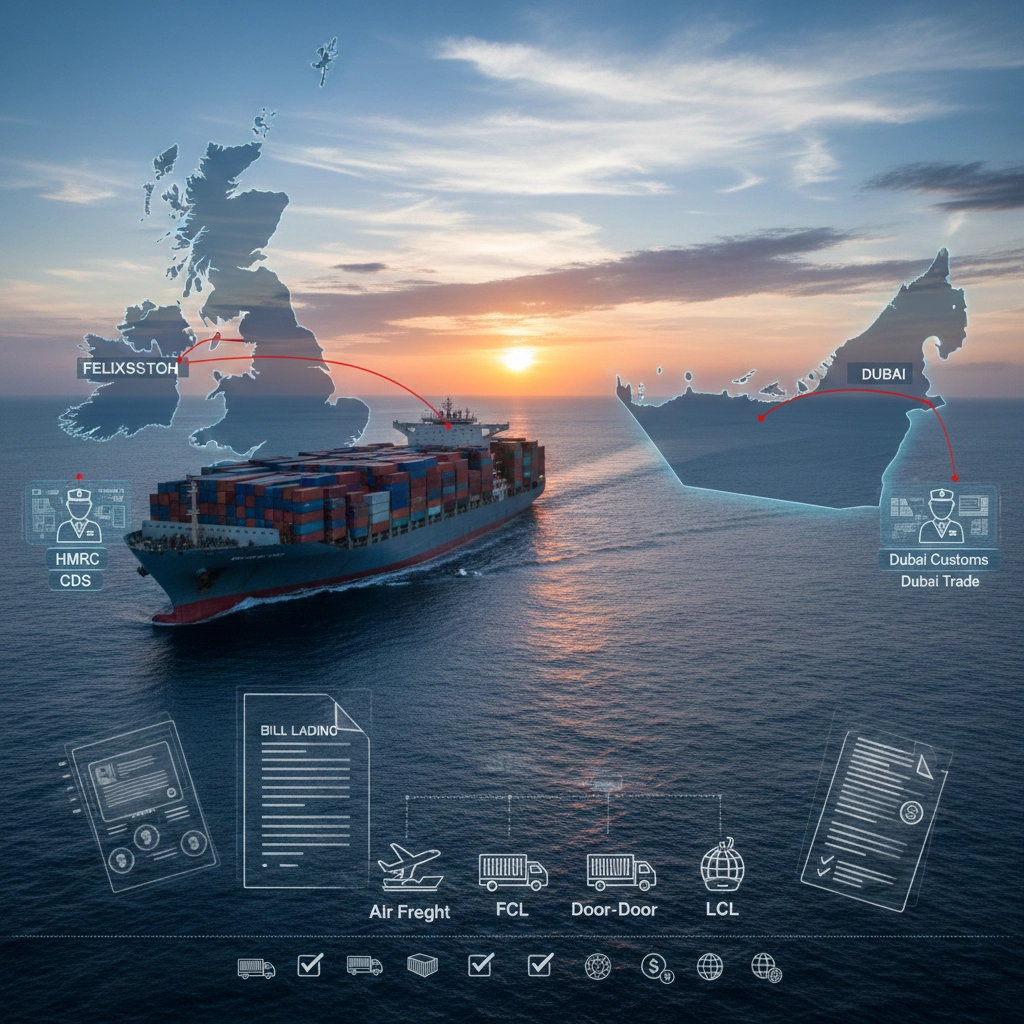
The trade route between the UK and the UAE is one of the busiest in the world, supported by world-class infrastructure. Major UK ports like Felixstowe, London Gateway, and Southampton offer regular direct sailings to Jebel Ali Port in Dubai.
London Gateway and Southampton are particularly efficient for 2026 routes, often providing direct 21-day sailings. Choosing the right origin port can reduce your inland haulage costs significantly. For more details on regional variations, see our guide on UK to Pakistan shipping routes.
Main Shipping Methods Available
Although there are several reliable options depending on shipment size, urgency, and budget, choosing the right method helps reduce delays, control expenses, and ensure smooth customs clearance in the UK to Dubai.
Here, we explain the most commonly used shipping methods:
- FCL shipping for large volumes
- LCL shipping for small cargo
- Air freight for urgent shipments
- Sea freight for budget-friendly transport
- Door-to-door logistics for full-service delivery
Let's Make Your Container Shipping Preparation Checklist
Preparing shipping documents, checking container quality, and securing goods properly are all essential to reducing risk factors.
A proper checklist helps you avoid last-minute problems and unexpected costs. There are some of the basic key pointers that everyone should know and must follow them for the protected delivery of items.
First, double-cheque your cargo containers information carefully. Measure everything, including the labelled cartons, then prepare your shipping documents early. Even one missing paper can stop your container at customs.
After that, inspect your container. It should be clean, dry, and strong. Pack your goods tightly and use protective materials if needed. Lastly, confirm delivery details and insurance. When everything is planned, shipping becomes smooth and worry-free.
To set yourself completely stress-free, you should have proper information about cargo packaging rules and the container selection guide.
Cargo Packaging Rules: Cargo packaging plays an important role in ensuring that goods remain safe from origin to the desired destination. Only the correct packaging protects shipments from physical damage, moisture, and contamination.
Shippers must select packaging based on cargo type, weight, and shipping method. Heavy goods require reinforced boxes or crates, while delicate items need protective cushioning materials.
Container Selection Guide: Selecting the correct shipping container is not just a technical step. It directly impacts cargo protection, transit time, and overall shipping cost.
A well-matched container protects your goods, reduces damage risk, and avoids unnecessary shipping charges.
Undoubtedly, the professional container selection process improves delivery speed, reduces handling errors, and enhances customer satisfaction in global trade.
What Are The Essential Required Shipping Documents?
Keeping the essential documents while shipping is the most crucial step. The accurate shipping documentation helps customs authorities verify cargo, calculate duties, and approve clearance faster. It also reduces risk, prevents disputes, and builds trust with freight forwarders and buyers.
These are the commercial invoice, packing list, bill of lading or airway bill, certificate of origin, and customs clearance forms. This will confirm cargo ownership, shipment value, product details, and legal compliance.
Export Paperwork and Import Clearance Documents
Both the processes of import and export paperwork play a key role in global trade logistics. It allows customs authorities to verify cargo details and ensures shipments comply with international trade laws. Proper documentation also protects exporters from legal risks and unnecessary delays.
Important export documents usually include:
- Commercial invoice
- Packing list
- Export customs declaration
- Certificate of origin
- Transport documents
On the other hand, common import documents include the commercial invoice, packing list, certificate of origin, export declaration, and bill of lading. Each paper must match the shipment details accurately.
How Does the UK and Dubai Customs Clearance Process Work?
Both regions are major global trade hubs, but their clearance rules and procedures vary from one another. Customs clearance is the process of preparing and submitting documents to customs authorities to allow goods to enter or leave a country legally. Both the UK and Dubai have structured systems and have different container freight rates according to their regulations.
In the table below, we mention the major key difference of both.
S.No: | Aspect | UK | Dubai |
1 | Authority | HMRC | Dubai Customs |
2 | Import Duty | Varies | Usually 5% |
3 | Digital System | CDS | Dubai Trade |
4 | Free Zones | Limited | Widely available |
The UK follows strict compliance rules.
Important Requirements:
- Valid EORI number
- Correct HS codes
- Accurate commercial invoice
- Import VAT and duty payment
On the other hand, Dubai offers one of the world’s most advanced customs systems.
Key Advantages:
- Online clearance through Dubai Trade
- Quick inspections
- Low customs duty rates
- Special benefits for free zone companies
Shipping Cost Breakdown Process From the UK to Dubai
Understanding the cost breakdown of container shipping UK to Dubai can make a significant difference when planning your shipment, which is essential for smooth and budget-friendly cargo delivery.
Shipping expenses can vary depending on factors such as cargo type, shipping method, customs duties, and destination charges.
Freight Charges, Port Fees and Duties:
Freight charges are the basic transportation costs for moving cargo between countries. Port fees apply when your shipment is processed at ports, covering services like handling and storage. Duties are taxes imposed by customs authorities based on product category and declared value.
Shipping Timeline and Average Transit Time
On average, the shipping timeline varies based on the chosen transport mode and service level. Normally, air freight shipments generally have a transit time of 3–7 days, offering speed and reliability for time-sensitive cargo.
Sea freight shipments typically take 30–45 days, making them a cost-effective solution for large commercial consignments.
Key Evaluation Criteria For Selecting a Freight Forwarder
Customer service quality is another key evaluation criterion for choosing a freight forwarder.
Freight forwarders who offer clear cost breakdowns and consistent updates help businesses plan better and avoid unexpected delays or charges during international shipping.
Reliable logistics and container transport providers focus on transparency, timely communication, and shipment tracking.
Pakistan Import Duties, Taxes, and Clearance
Pakistan’s import process includes paying customs duties, taxes, and completing clearance procedures. To clear goods through customs, importers must provide proper documentation, including invoices, packing lists, bills of lading, and any required certificates.
Final Thought
By working with a trusted logistics provider, you can minimise risks and keep your shipment moving efficiently. A complete container shipping checklist is the key to successful UK to Dubai freight services.
Proper planning, accurate paperwork, compliant customs procedures, and secure container loading all contribute to timely delivery, no matter which option you select.
If you are struggling to find the right option, then don’t worry about it. You can ship from the UK to Dubai smoothly, safely, and without delays with British Freight.
FAQs
What documents are required for container shipping to Dubai?
The document includes a Bill of Lading, Commercial Invoice, Packing List, Certificate of Origin, and any special permits required by Dubai customs.
Do I need customs clearance in both the UK and Dubai?
Yes, you must have clear UK export customs and Dubai import customs. Proper documentation ensures smooth clearance at both ends.
What ports are commonly used for UK to Dubai container shipping?
Major UK ports include Felixstowe, Southampton, and London Gateway, while shipments to Dubai usually arrive at Jebel Ali Port.
How can I ensure smooth container shipping from the UK to Dubai?
A detailed checklist, preparing documents correctly, choosing the right container type, and working with an experienced shipping company ensure a hassle-free experience.