Mastering Shipping from China to the United Kingdom Post Brexit
Brexit has significantly altered the way goods are shipped from China to the United Kingdom, affecting costs, timelines, and trade compliance.
Brexit has introduced a series of challenges for UK importers sourcing products from China. From customs clearance delays to new trade documentation and higher freight costs, businesses are feeling the impact across every process of the shipping from China to the United Kingdom.
Hence, there are a number of key factors that highlight Brexit has greatly impacted from China to the United Kingdom.
Here we mention a few of them:
- Brexit changed shipping regulations between China and the UK.
- UK importers now complete full customs documentation.
- New trade barriers actively delay cross-border freight, making efficient planning more critical than ever.
- China to UK shipping costs increased after Brexit.
- VAT rules now apply to low-value imports.
- Delays at ports affect container turnaround time.
- Supply chains became less predictable.
- Freight compliance became legally mandatory.
Brexit Impact on China to UK Shipping
Undoubtedly, China remains a vital partner, making container shipping from China to the UK a cornerstone of British retail. As Brexit reshaped the logistics landscape for China to UK shipping by introducing new trade barriers and customs requirements. There is a huge visible difference and impact on pre- and post-Brexit.
The importers must now comply with full border declarations, product classification rules, and updated VAT procedures, which have increased administrative workload across the supply chain.
Meanwhile, as time goes on, the freight shipping from China to the UK costs have also increased due to additional taxes, duties, and clearance fees. These extra charges affect both importers and consumers, as higher logistics costs often lead to higher product prices in the UK market.
Here in the table below, we mention the difference between pre and post context.
Feature | Pre-Brexit (CHIEF) | 2026 Standards (CDS) |
Declaration System | CHIEF (Legacy) | CDS (Customs Declaration Service) |
Import Code | 8-Digit HS Code | 10-Digit Commodity Code |
VAT Protocol | Upfront Payment / C79 | Postponed VAT Accounting (PVA) |
Security Filing | Basic Manifest | ICS2 Version 3 (Mandatory 2026) |
Typical Lead Time | 30–35 Days (Suez) | 45–55 Days (Cape Diversion) |
Changes in Customs, Import Rules and Increased Shipping Costs After Brexit
A major challenge for international shipping companies and online sellers has been the respective customs and import rules.
Importers are now required to comply with new VAT systems, HS codes, digital customs forms, and tighter product verification standards.
All these types of adjustments impact clearance speed and shipping costs from China to the UK.
There are two major requirements that need to be clearly understood in terms of customs and import rules.
The 2026 Transit Reality: Cape of Good Hope vs. Suez Canal
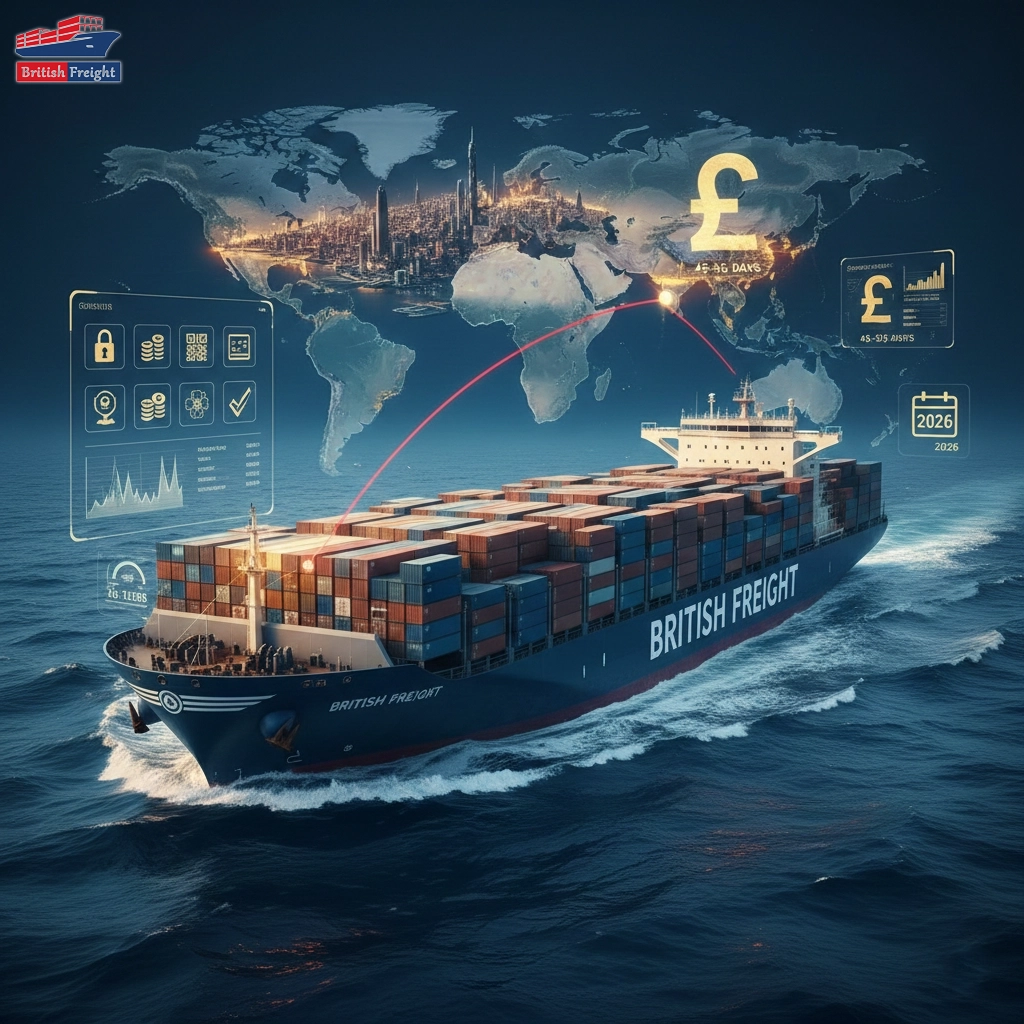
In early 2026, shipping from China to the United Kingdom faces a unique challenge. While the Suez Canal remains the traditional shortcut, current security diversions mean most vessels now reroute via the Cape of Good Hope. This shift adds roughly 3,500 nautical miles to the journey.
Importers should prepare for transit times of 45–55 days, compared to the 35 days seen in previous years. This delay impacts inventory turnover and requires businesses to place orders at least two months in advance. By choosing a partner like British Freight, you gain access to real-time tracking that accounts for these extended 2026 maritime routes.
Financial Strategies: Postponed VAT Accounting (PVA)
One of the most significant post-Brexit shifts is how businesses handle tax. Instead of paying import VAT upfront at the border and waiting months for a refund, UK importers now use Postponed VAT Accounting (PVA).
When managing shipping from China to the United Kingdom, you can account for import VAT on your periodic VAT return rather than paying it as soon as the goods arrive at Felixstowe or Southampton. This strategy significantly improves cash flow, allowing your business to keep liquidity for operational needs. To use PVA, you must ensure your CDS (Customs Declaration Service) entry correctly flags your EORI number and VAT registration details.
VAT and Duty Requirements
After Brexit, UK importers must pay VAT and customs duties on goods arriving from China, increasing upfront shipping costs. This change has made accurate tax planning essential for smooth and affordable imports.
New Compliance Documents
New trade rules require detailed customs documentation for goods entering the UK from China. Proper compliance helps businesses avoid penalties and maintain reliable delivery schedules.
Freight Charges
Businesses that compare freight forwarders and optimise shipping schedules can significantly reduce overall transportation expenses. Freight charges are one of the most important components of international shipping costs.
They include the price of moving cargo by air freight, sea freight, or road transport from origin to destination. Factors such as shipment size, container type, fuel surcharges, seasonal demand, and route distance directly affect freight rates.
Navigating 2026 Customs via Digital Declarations
In 2026, the transition to fully digital customs is mandatory. For container shipping from China to the UK, businesses must now use the updated Customs Declaration Service (CDS). This system replaces the old CHIEF platform, requiring 12-digit HS Code classifications instead of the previous 8-digit codes for specific categories. Failing to use the correct 12-digit code can result in automatic flags and port holding fees.
Direct vs. Transshipment Routes from China
When planning your supply chain, choosing the right route is vital. Direct sailings from Shanghai or Ningbo to Felixstowe or Southampton typically take 30–35 days. However, due to post-Brexit port congestion, some carriers use transshipment via hubs like Rotterdam or Antwerp. While this can sometimes be cheaper, it adds 7–10 days to your timeline and requires additional safety and security declarations (ENS).
Storage and Handling Fees
Storage and handling fees refer to the expenses incurred for warehousing goods and managing cargo operations such as loading, unloading, labelling, and packaging. Reducing delivery delays and improving supply chain coordination can significantly lower these additional costs.
Delays in China–UK Cargo Delivery
Delays in China UK cargo delivery are a growing concern for international traders. Port congestion, regulatory changes, container shortages, and shipping route disruptions often extend transit times. Using efficient logistics planning and real-time cargo tracking helps businesses reduce uncertainty and maintain smooth trade operations.
Choosing experienced shipping partners and using real-time tracking tools can help importers stay informed and manage these delays more effectively.
Nowadays, many importers are turning to modern tracking technology and reliable freight services to stay ahead of potential disruptions.
Here we mention the main key points that play an important role in order to avoid any delay in your China-UK cargo delivery.
Port Clearance Time
Port clearance time measures how quickly shipments are processed and released after arrival. Efficient clearance supports timely imports or exports, and reducing this time helps businesses avoid unnecessary delays.
Logistics Bottlenecks
The bottlenecks arise when demand exceeds logistics capacity, causing shipment delays and operational pressure. Bottlenecks reduce reliability and increase logistics costs.
Future of UK–China Shipping Post-Brexit
The post-Brexit have significantly impacted the future of UK–China shipping, and it is reshaping global trade dynamics.
In today’s advanced era, smart shipping technologies, AI-based route optimisation, and predictive tracking and import regulations UK are revolutionising the supply chain. The key to thriving post-Brexit lies in embracing technology while staying compliant with new trade rules.
Post-Brexit, the UK is carving out a niche as a services powerhouse, exporting high-value expertise while relying on China for the manufacturing and green-tech components essential for Britain’s energy transition.
It is about managing data, compliance, and efficiency simultaneously, as “Future of Shipping” isn’t just a headline it’s about your bottom line.
Here are a few essential points that are important and leave an impact on the future of UK-China shipping post-Brexit:
- Post-Brexit rules are shaping UK–China shipping with stricter customs procedures.
- Digital logistics and smart containers are reducing delays and improving efficiency.
- AI-based route optimisation ensures faster, cost-effective freight movement.
- Businesses leveraging real-time tracking can proactively handle disruptions.
- The future of UK–China shipping favours tech-savvy, compliant importers.
Final Thought
The post-Brexit shipping world may seem complex, but with the right logistics partner, UK importers can maintain efficiency and reduce surprises.
Many businesses overcome delays, manage duties, and streamline shipments from China to the UK, keeping the operations competitive and stress-free with suitable logistics partners.
If you are struggling to find that dependable shipping and logistics partner, then British Freight is there to resolve all your problems in just one go.
British Freight specializes in navigating these 10-digit commodity codes and Cape of Good Hope transit adjustments, making your supply chain predictable again.
FAQs
Are your UK freight forwarders prepared for post-Brexit changes?
Yes, our freight forwarders have adapted, offering customs clearance support and updated shipping solutions.
What role does VAT play in post-Brexit shipping from China?
Importers now calculate and report VAT at the point of entry, often using PVA to protect their cash flow and maintain liquidity.
Has Brexit affected the availability of shipping slots from China to the UK?
Yes, increased customs processing has caused congestion at UK ports, impacting slot availability.
How does Brexit affect returns from the UK to China?
Returns now require customs documentation, which can complicate reverse logistics.