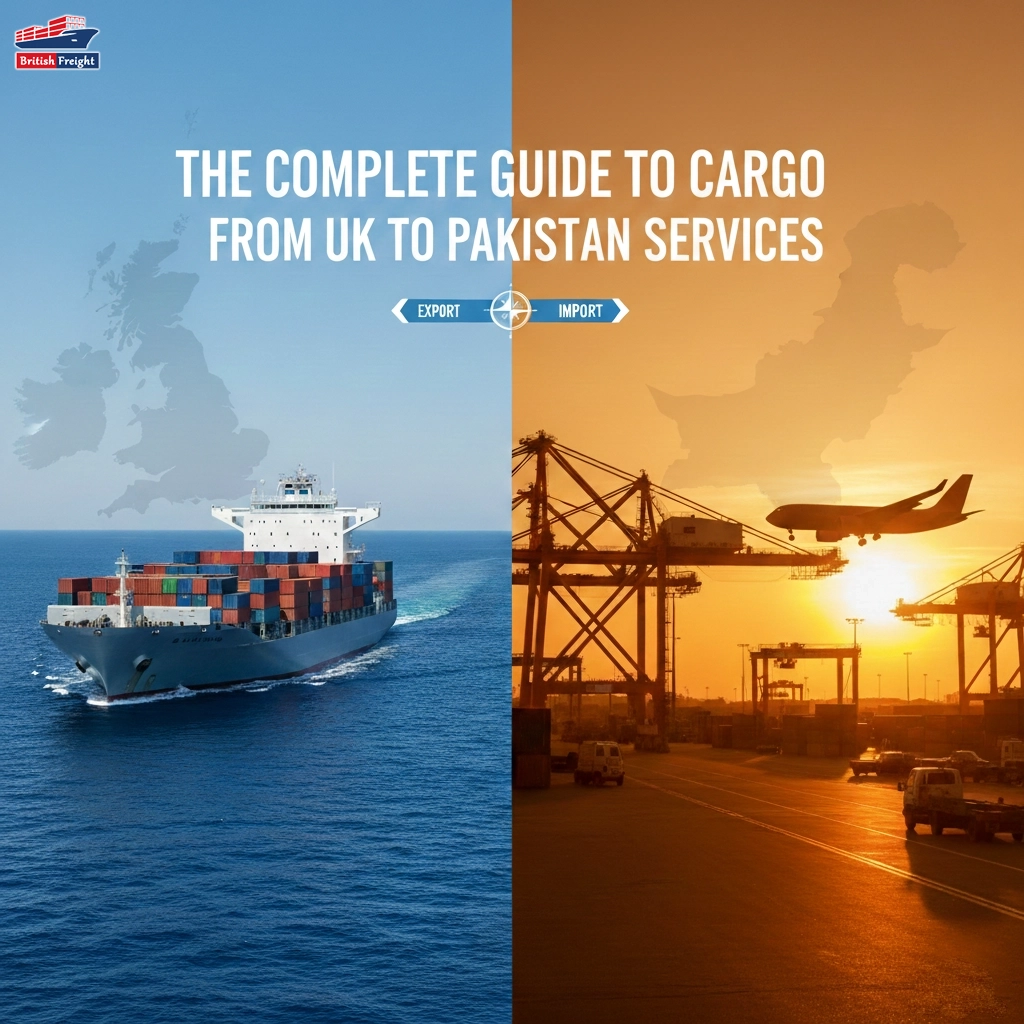
The Complete Guide to Cargo from UK to Pakistan Services
Air or sea? FCL or LCL? Shipping from the UK to Pakistan has more options than ever but which one is right for you?
Now this will no longer remain an issue for you, as you have clicked on the right blog.
In this blog, we will provide you with a step-by-step, comprehensive guide for cargo from the UK-to-Pakistan services that will cover all crucial key factors.
In today’s fast-paced world, UK to Pakistan cargo services have become more important than ever. Due to the increasing trade between the UK and Pakistan, combined with the growing e-commerce demand, reliable cargo shipping is essential.
From air and sea freight options to cost-saving tips, customs requirements, and choosing the right service providers, ensure your cargo reaches its destination safely and efficiently.
Why Reliable UK to Pakistan Cargo Services Matter?
Reliability is key, especially when it comes to the commercial goods, or high-value shipments, choosing a trustworthy cargo service ensures your shipment reaches its destination safely and on time.
If it is planned properly, so it will be completely free from disruption, whether it is Pakistan, Dubai or China.
There are a number of reliability measures in order to cheque whether the services are working ideally or not. For example, if you look for cargo from the UK-to-Dubai, then you must consider the following points.
Every reliable service must offer that:
- Timely delivery – Ensuring goods reach their destination as promised.
- Secure handling – Preventing damage, theft, or loss.
- Transparency – Real-time tracking and updates on your cargo.
- Customs assistance – Smooth handling of documentation and regulatory requirements.
How to Choose the Best UK to Pakistan Freight Service?
Due to the large market and the number of freight forwarders operating, it has become essential. It become so important to understand the right selection process extensively. It will help to run businesses smoothly and avoid delays, hidden charges, and logistics complications. You should keep in mind before choosing the best freight from the UK-to-Pakistan, and make the overall process without any hassle.
Hence, we will mention all the essential steps which every individual should look for in stress-free international shipping.
Step 1: Clear Identification of Your Shipping Requirements
Before selecting a freight service, clearly define your shipping needs. Different cargo types require different handling, documentation, and transport modes.
Consider the following key factors:
- Type of cargo (commercial goods, personal effects, perishables, machinery)
- Shipment size (full container load – FCL or less than container load – LCL)
- Preferred shipping mode (air freight or sea freight)
- Delivery urgency and budget constraints
Having clarity on these factors allows you to shortlist freight companies that specialise in UK to Pakistan shipments.
Step 2: Verify Experience in UK to Pakistan Freight Routes
Freight companies familiar with the UK–Pakistan trade have to verify and ensure the previous work experience. As the experience plays a crucial role in smooth international shipping. For a challenge-free transit, it is necessary to have a clear idea of lanes, understand port operations and customs regulations.
Look for freight providers that must have that experience:
Have proven experience shipping from the UK to Pakistan
Maintain strong partnerships with shipping lines and airlines
Understand customs clearance procedures in both countries
An experienced freight service minimises delays and ensures compliance with international cargo shipping regulations.
Step 3: Licencing, Certifications, and Compliance
Legal matters are highly sensitive and must be handled with mindfulness and proof. Licenced and certified freight forwarders provide reliability and accountability. Always choose a freight service that operates legally and follows international logistics standards.
Must ensure that the company has:
- Valid freight forwarding licences
- Memberships with recognised logistics associations
- Compliance with UK export and Pakistan import regulations
Step 4: Compare Shipping Costs Transparently
Some freight services offer low rates while adding hidden charges later. So the cost analysis must be taken into consideration and then finalised. The price comparison is essential, but the lowest quote is not always the best option.
When comparing costs, you should review:
- Clear breakdown of freight charges
- Port handling, documentation, and customs fees
- Fuel surcharges and delivery costs in Pakistan
A transparent pricing structure helps you avoid unexpected expenses and manage your logistics budget effectively.
Step 5: Evaluate Transit Time and Delivery Reliability
Reliable delivery timelines and consistent evaluation are the paramount to effective services. Timely delivery is a key factor when choosing a UK to Pakistan freight service. Delays can affect business operations and customer satisfaction, and we can easily lose the trust factor.
Assess the service provider based on:
- Estimated transit time for air and sea freight
- Frequency of shipments
- Past delivery performance and reliability
Step 6: Assess Cargo Safety and Insurance Coverage
A professional freight service prioritises secure handling and offers insurance options for additional protection. There is no compromise on safety, container freight and security matters, and insurance coverage ensures financial protection against unforeseen risks during transit.
Cheque if the freight provider:
- Uses proper packaging and handling methods
- Offers cargo insurance coverage
- Has a clear claims process for damaged or lost goods
Step 7: Review Customer Support and Tracking Services
In the non-stop tracking process, 24/7, day and night, effective communication is essential in international freight shipping. Choose a freight service that keeps you informed throughout the shipping process. Simply, a responsive freight provider improves transparency and peace of mind
Look for features such as:
- Real-time cargo tracking
- Dedicated customer support
- Regular shipment updates
Step 8: Customer Reviews and Market Reputation
Every single customer feedback provides valuable insights into service quality and reliability. Reviews help identify consistent performance and potential red flags. A well-reviewed freight service is more likely to deliver a smooth UK to Pakistan shipping experience.
Before finalising, consider:
- Online reviews and testimonials
- Industry reputation and referrals
- Long-term client relationships
Types of Cargo Shipping from the UK to Pakistan
Along with the growing trade and personal connections between the UK and Pakistan, choosing the right cargo shipping method. Selecting the right type of cargo shipping is crucial for cost efficiency, safety, and timely delivery. There are numerous types of cargo shipping services which have their key advantages and limitations according to their different cost ranges.
Here is the table below, and we highlight the most common ones.
| S.No | Cargo Shipping Type | Best For | Key Advantages | Limitations |
| 1 | Air Cargo Shipping | Urgent, high-value, or perishable goods | Fastest delivery, high security, reliable schedules | Higher cost, weight and size restrictions |
| 2 | Door-to-Door Cargo Services | Personal goods, household items | Convenience, minimal paperwork for the customer | Slightly higher service charges |
| 3 | Sea Cargo (FCL – Full Container Load) | Large shipments, bulk commercial cargo | Cost-effective for high volumes, better cargo safety | Longer transit time |
| 4 | Sea Cargo (LCL – Less than Container Load) | Small to medium shipments | Lower cost for small volumes, flexible shipping | Slightly longer delivery, shared container risk |
| 5 | Personal & Household Cargo | Overseas Pakistanis relocating or sending goods | Cost-efficient, tailored packing | Limited to non-commercial items |
| 6 | Commercial Cargo Shipping | Retail, wholesale, and manufacturing products | Customs support, scalable logistics solutions | Requires proper documentation |
| 7 | Courier & Express Cargo | Documents, gifts, samples | Speed, tracking, and minimal customs process | Not suitable for large shipments |
| 8 | Temperature-Controlled Cargo | Pharmaceuticals, food, chemicals | Maintains product quality | Higher operational costs |
Tips to Make Your Cargo Shipping from the UK to Pakistan Smooth
Selecting the right choice not only reduces costs but also strengthens supply chain reliability and customer satisfaction in the long run.
In order make the process of cargo shipping smooth and effortless, there are a number of effective tips that we should follow:
- Choose a Reliable Freight Forwarder
- Select the Right Shipping Method
- Use Proper Packaging and Labelling
- Plan Your Shipment Timeline Carefully
- Communicate Clearly with Your Shipping Partner
- Proactively Understand Customs Regulations in Advance
- Confirm Delivery Arrangements
Final Thought
As a trusted cargo partner, UK to Pakistan shipping ensure secure and cost-effective experience. Only the right processes, shipping modes, and reliable service make things easy.
For long-distance countries like as cargo from the UK-to-China choosing between air, sea, and door-to-door services to manage customs clearance and delivery timelines, a well-planned shipping strategy ensures your goods arrive safely, on time, and within budget.
Are you also struggling to find a trustworthy service? Then contact British Freight today.
Our highly professional and dedicated team is there to assist you!
FAQs
How much does cargo shipping from the UK to Pakistan cost?
The costs depend on cargo weight, volume, shipping method, destination city, and customs duties.
How can I track my cargo shipment within your service?
All reliable UK to Pakistan cargo services provide online tracking systems using a tracking or shipment reference number.
How do I choose the best UK to Pakistan cargo service?
Review the experience, transparent pricing, customer reviews, tracking options, insurance coverage, and strong customer support.
What documents are required for UK to Pakistan cargo shipping?
The documents include a commercial invoice, packing list, bill of lading or airway bill, CNIC/passport copy, and customs declaration forms.